

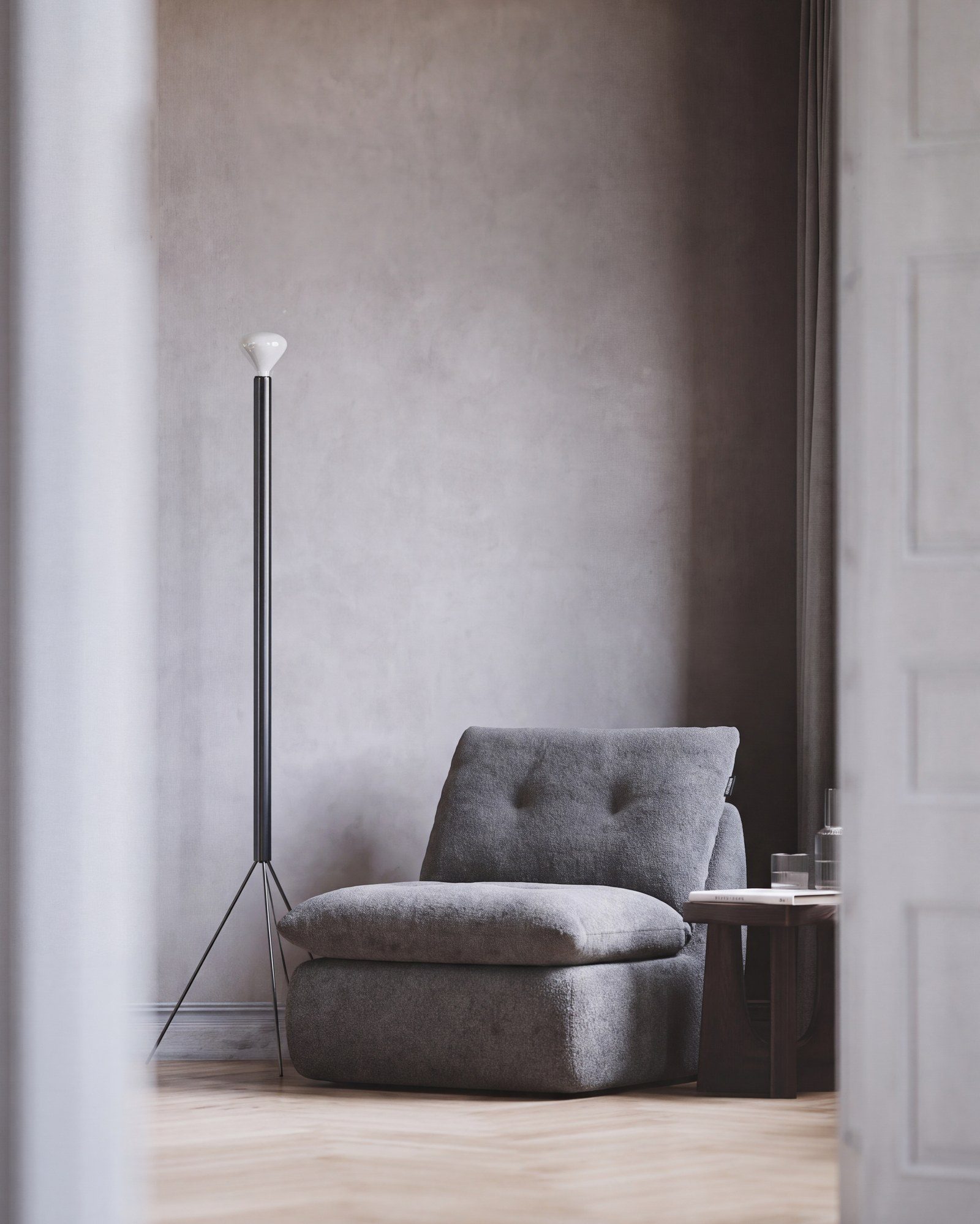
The best small armchairs for apartments fit your available floor space, leave clear walking paths and provide the comfort you actually need. At NKNEST, we suggest measuring the chair’s finished dimensions, doorways and lift access before choosing a style. A considered single-seater chair can create a comfortable reading corner or extra living-room seat without making the apartment feel crowded.
Measure the Finished Chair, Not Just the Available Corner
Start by measuring the width and depth of the space where your chair will sit. Compare those measurements with the product’s fully expanded size, including curved arms and a wider base. A low-profile chair may look visually compact in a styled photo while occupying more floor area than expected. Use product specifications, not photography alone.
Mark the proposed footprint with removable tape or paper. Open nearby doors and drawers, walk past the outline and check whether you can reach windows, bookshelves and power points comfortably. If the chair faces a coffee table, leave room to move between the pieces without turning sideways.
Plan Your Walking Routes First
In an apartment, circulation matters as much as furniture placement. Consider the route from the entrance to the kitchen, the path towards a balcony and clearance around bedroom storage. A single-seater may be the perfect additional place to relax, but not if it interrupts everyday movement.
Start with your existing sofa and larger furniture. Position the proposed chair so people can enter the room naturally, then test whether cupboards open and dining chairs pull out. Avoid relying on one universal clearance measurement: room proportions, mobility needs and furniture shapes all change what feels practical.
Choose a Shape That Feels Lighter in the Room
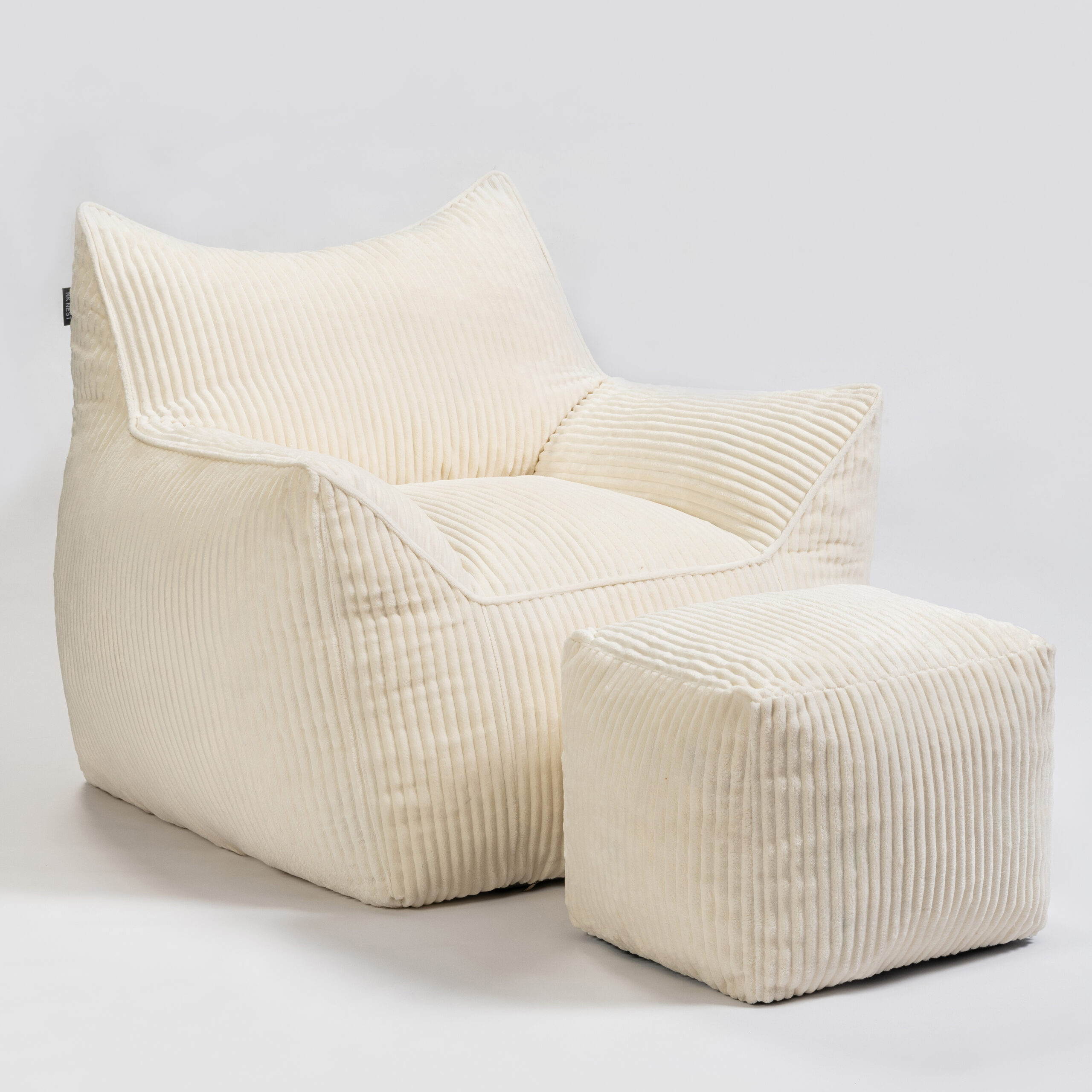
Proportion influences how spacious a home feels. Rounded arms can soften the straight lines of cabinets and windows, while a simple silhouette helps prevent visual clutter. Cream, off-white and light grey upholstery can sit quietly within a neutral scheme; darker colours can make the chair a deliberate feature.
If you favour minimalist styling, combine one statement chair with a slender floor lamp rather than adding several accent pieces. In an open-plan living area, angle the chair slightly towards the sofa to create a conversation zone. In a bedroom, a seat beside a window can create a restful corner if doors and wardrobes still open freely.
Think About Comfort, Not Just Compactness
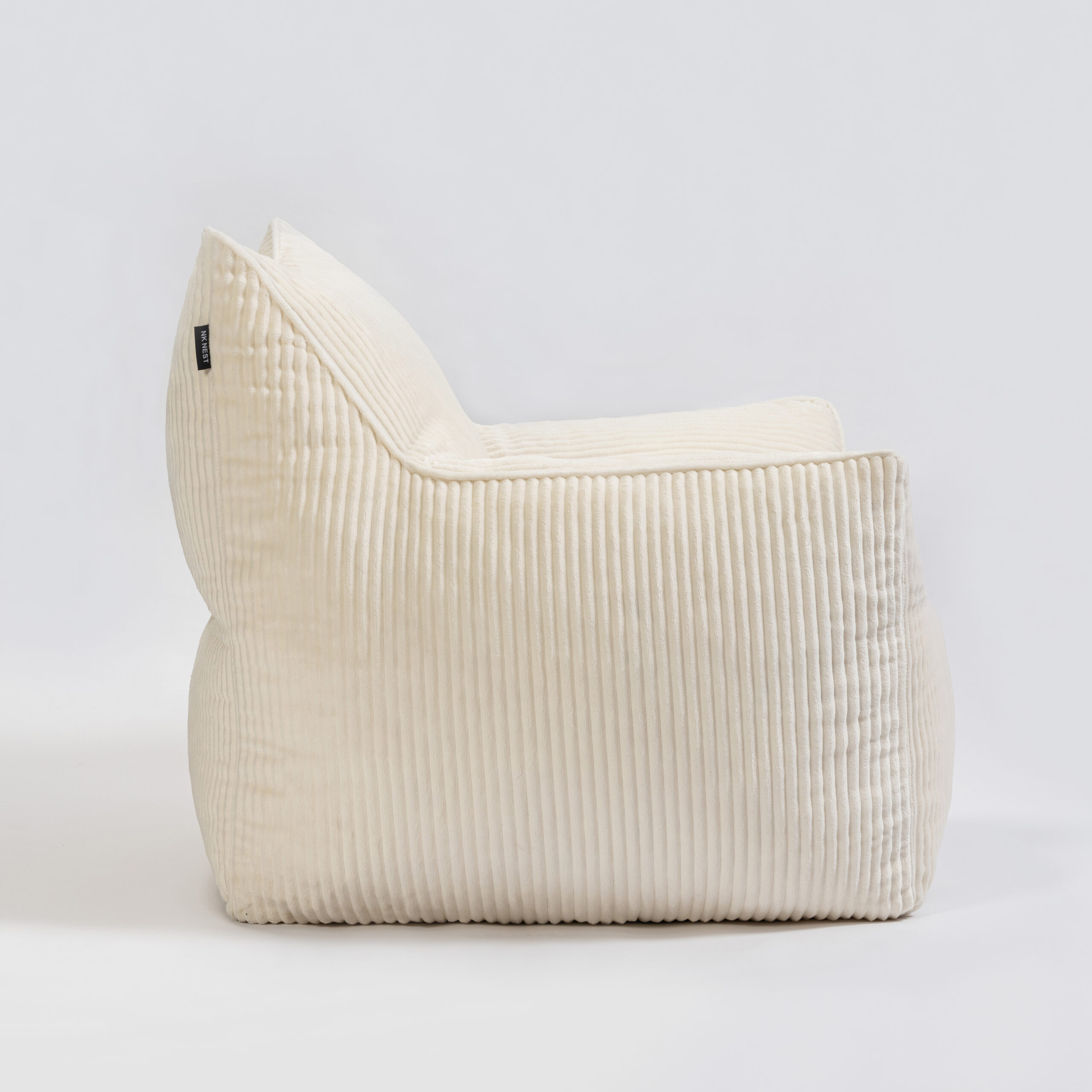
The smallest external measurements do not automatically mean the best seat. Check seat width, depth, arm shape and backrest support against how you intend to use it. Someone who reads upright may prefer a different sitting position from someone who enjoys curling up with a throw. Compare dimensions with a chair you already find comfortable.
At NKNEST, our integrated foam lounge chairs are sculpted as one piece, with supportive contours, curved arms and a generous sitting area. They are designed for inviting comfort without complicated assembly. Because our chairs prioritise sculptural form, check the exact finished dimensions of each product rather than assuming every model qualifies as a compact armchair.
Pick an Apartment-Friendly Fabric and Colour
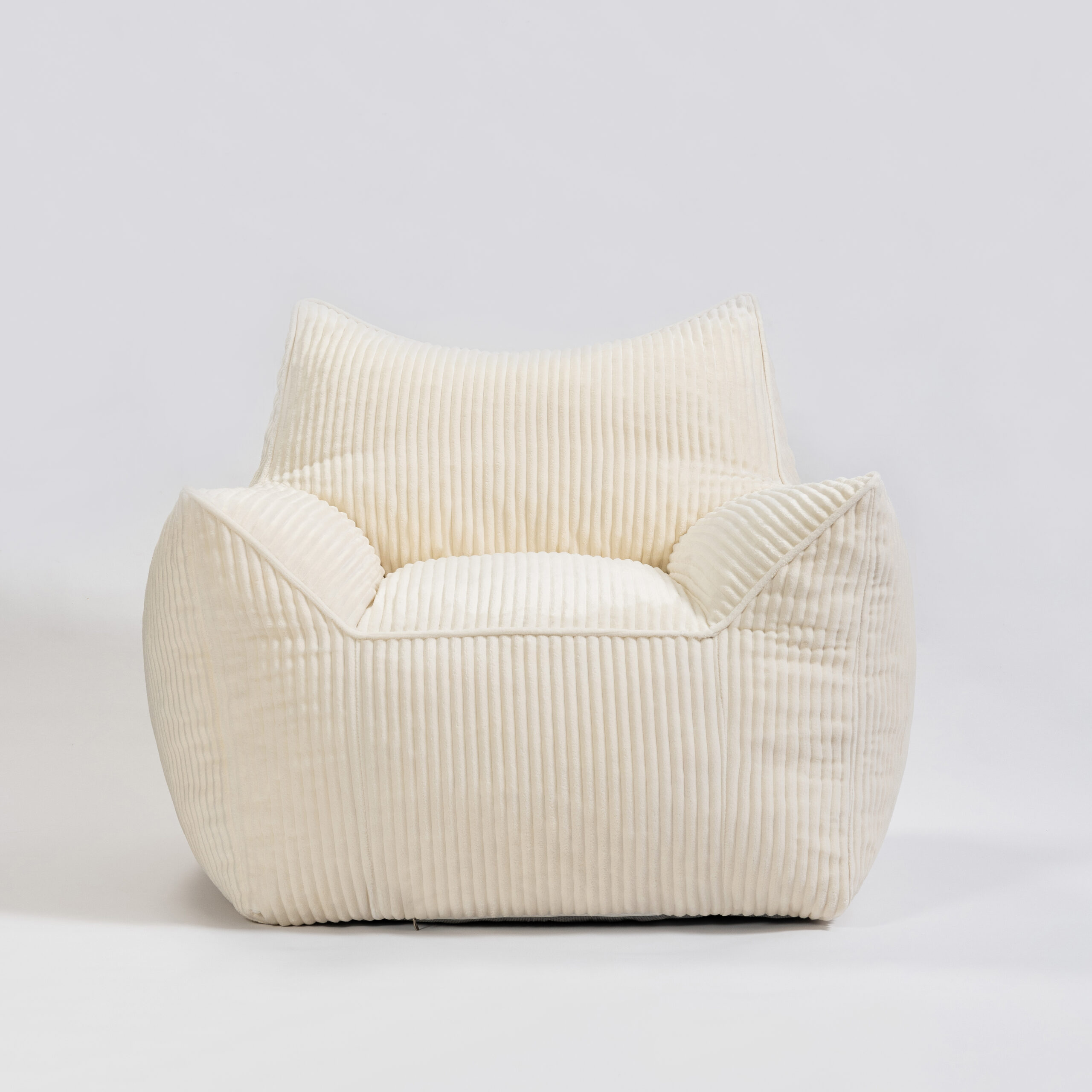
Texture adds character without taking up extra floor space. Corduroy introduces visible ribs that look beautiful against timber flooring, teddy fleece brings a cosy cloud-like finish and short plush offers a smooth appearance. Think about existing surfaces: textured fabric can warm a sleek interior, while a smoother finish can balance a heavily patterned rug.
A cream statement chair pairs well with pale timber, warm white walls and natural fibres. Grey can blend into a restrained palette, while pink or caramel can create a feature. Check upholstery care information and your daily habits before choosing a fabric.
Measure the Delivery Route Through Your Building
Learn more about unpacking and expansion in our guide to how a compressed sofa works.
An armchair that fits the living room may still be difficult to carry through a narrow hallway or lift. Measure your building’s smallest doorway, lift opening and turning points between delivery entrance and room. Compare these with the delivery-carton measurements. Getting furniture upstairs is part of the buying decision, not an afterthought.
NKNEST’s vacuum-compressed single-seater lounge chairs arrive in compact packaging and expand after unpacking. Their one-piece foam construction requires no tools or separate parts to assemble. Allow approximately 24–48 hours for expansion towards the intended shape, following each product’s instructions. Compact packaging does not reduce the chair’s final footprint.
Where Should a Small Armchair Go?
Beside the sofa
Angle the chair towards your main seating to create an extra conversation spot. Leave room to walk around the coffee table and avoid blocking natural light.
In a bedroom corner
Pair the chair with a reading lamp and a slim surface for books. Check clearance around wardrobes and bedside furniture before choosing the spot.
Next to a window
A window-side seat can make an underused area purposeful. Consider direct sunlight, curtains and nearby doors before finalising placement.
Choose Your Apartment Chair With Confidence
Before buying, confirm the finished chair size, carton dimensions, upholstery, care needs and relationship to your existing furniture. These checks make it easier to invest in a seat that feels useful long after the room has been styled.
Explore NKNEST’s single seater lounge chairs for sculptural seating suited to modern interiors, and view our Cloud Lounge Chair in Corduroy Cream White for curved arms and tactile texture. Whether furnishing a Sydney apartment or creating a reading corner elsewhere in Australia, the right chair should suit both your routine and the movement of your home.
Frequently Asked Questions
Are vacuum-compressed armchairs suitable for apartments?
Compact packaging can make delivery and manoeuvring easier than the finished chair’s dimensions suggest. Always check carton size and final measurements; neither should be assumed to fit every lift or room.
Should I choose the smallest armchair available?
Not necessarily. Balance walking clearance with the seat width, depth and support you like. A slightly wider chair may be the better long-term choice when it fits the layout comfortably.
